

An investor property inspection is a systematic, condition-focused evaluation performed during due diligence to identify physical defects, forecast capital expenditures, and protect your real estate investment from hidden financial risk. Unlike a standard home inspection, this process goes beyond surface condition to assess long-term ownership costs and their direct impact on cash flow and ROI. 86% of property inspections in 2026 uncover at least one issue, with roof problems, electrical concerns, and window defects topping the list. That figure means the odds are strongly against any investor who skips this step. Standards from organizations like ASHI, InterNACHI, and ASTM E2018-24 define what a thorough evaluation must cover.
What is investor property inspection and why it matters
An investor property inspection is a condition-focused assessment that prioritizes capital expenditure timelines, deferred maintenance, and risks to ROI over cosmetic appearance. The industry term for this process is a “pre-purchase property condition assessment,” though real estate investors commonly call it an investor inspection. Both terms describe the same goal: understanding what a property will cost you beyond the purchase price. Skipping this step is one of the most expensive mistakes an investor can make. Effective property inspections prevent unexpected costs that erode anticipated returns before you ever collect a dollar of rent.
The distinction from a lender appraisal matters here. Lender appraisals focus on market value only, while property inspections focus on condition and safety to protect your capital. An appraisal tells you what the market will pay. An inspection tells you what the property will demand from your wallet over the next five to ten years.
How do investor inspections differ from standard home inspections?
A standard home inspection serves a homebuyer who plans to live in the property. An investor inspection serves someone running a financial analysis on a potential asset. The scope, priorities, and reporting language are fundamentally different.
| Feature | Standard home inspection | Investor property inspection |
|---|---|---|
| Primary focus | Habitability and safety | CapEx, cash flow risk, ROI impact |
| Report emphasis | Cosmetic and functional issues | Repair cost timelines and severity |
| Inspector credential | State licensed | Certified Master Inspector (CMI) preferred |
| Add-on services | Rarely requested | Thermal imaging, sewer scopes common |
| Decision driver | Buyer comfort | Financial viability |
Investor inspections prioritize findings that affect your bottom line. A cracked tile in the bathroom is a cosmetic note. A failing HVAC system with three years of life left is a CapEx liability that changes your offer price. Certified Master Inspectors (CMI) carry the advanced expertise needed to assess complex investment properties beyond what basic state licensing requires. Selecting an inspector with CMI designation gives you a more reliable financial picture.
Key differences investors should know:
- Investor reports categorize findings by severity: safety hazards, major defects, and minor maintenance items
- Investor inspections account for long-term ownership costs, not just what needs fixing today
- Reports include repair cost estimates to support negotiation and budgeting
- Inspectors with investment property experience understand rental code compliance requirements
Pro Tip: Ask your inspector directly whether they have experience with investment properties. A CMI who has inspected 50 single-family rentals will catch deferred maintenance patterns that a general inspector may miss entirely.
What does the investor property inspection process involve?
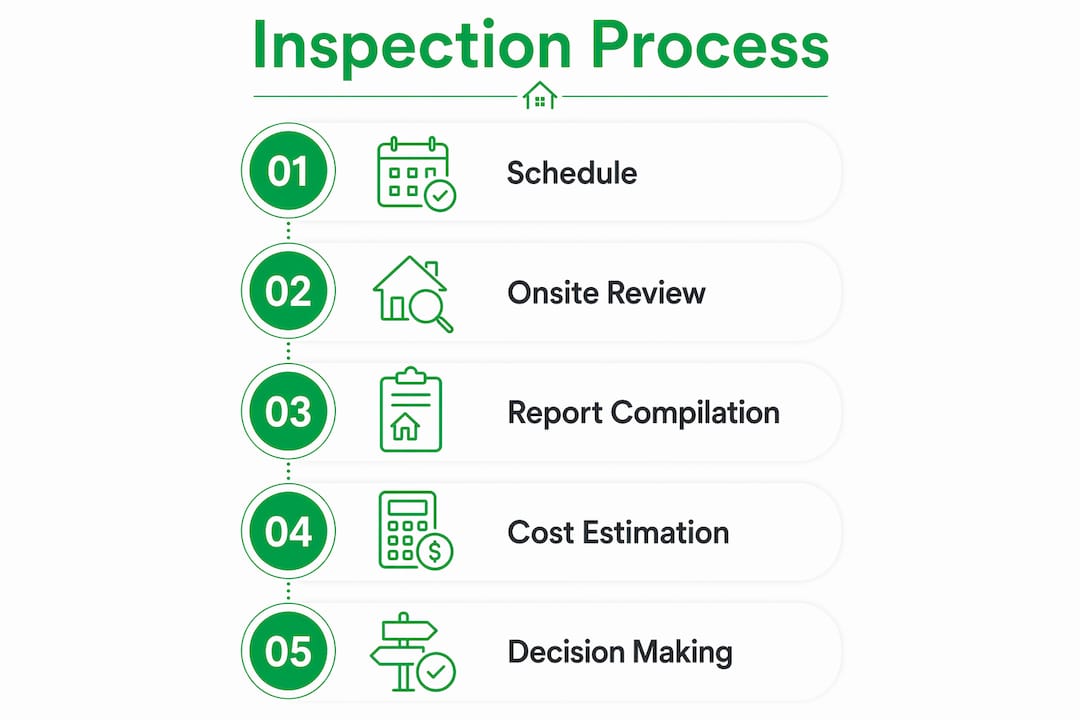
The inspection process follows a defined sequence from scheduling through report delivery. Knowing what to expect helps you prepare the property correctly and get the most accurate findings.
- Schedule with utilities active. Water, gas, and electricity must be on for the inspector to test all systems. A property with utilities off produces an incomplete report and forces a costly return visit.
- Onsite evaluation (2–4 hours). Professional inspections cover 300+ items across 10 major systems: structural components, roofing, exterior, electrical, plumbing, HVAC, insulation, interior, windows and doors, and fireplaces. The inspector works methodically through each system, documenting findings with photos.
- Request add-on services. Standard inspections do not include everything. Investors frequently underestimate the value of non-invasive add-ons like thermal imaging and sewer scopes. Thermal imaging detects moisture intrusion and insulation gaps invisible to the naked eye. A sewer scope reveals root intrusion or pipe collapse that could cost $8,000 or more to repair.
- Walkthrough with the inspector. Attend the inspection in person when possible. Inspectors explain findings in real time, and you can ask questions about repair urgency and cost range on the spot.
- Receive the digital report. Reports are typically delivered within 24–48 hours. A quality investor report includes photo documentation, severity ratings, and repair priority rankings organized by system.
The home inspection process varies slightly by property type and geography. A 1920s brick bungalow in St. Louis requires different attention than a 1990s suburban rental in Southern Illinois. Older properties typically generate longer reports with more deferred maintenance items.
Pro Tip: Request a sewer scope on any property built before 1980. Clay tile sewer lines from that era are prone to root intrusion and collapse. The $150–$300 add-on cost is trivial compared to a full sewer line replacement.
What are the most common issues found and how do they affect your investment?
Roof problems, electrical concerns, and window defects are the three most common issues uncovered in 2026 inspections. Each carries a different financial weight and urgency level.
Roof defects are the most expensive single-system finding. A full roof replacement on a typical rental property runs $8,000 to $15,000 depending on size and material. An inspector who identifies five years of remaining life on a roof gives you a concrete CapEx timeline to build into your financial model.
Electrical issues range from minor code violations to serious safety hazards. Federal Pacific and Zinsco electrical panels are known fire risks still found in older properties. Replacing a panel costs $1,500 to $3,000. Failing to identify this before closing means that cost comes out of your cash flow, not the seller’s pocket.
Window defects including failed seals, broken hardware, and single-pane glass affect both energy efficiency and tenant comfort. These are lower-cost repairs but signal deferred maintenance patterns that often extend to other systems.
Inspection reports categorize findings by system and severity, giving you a clear framework for negotiation. Common negotiation outcomes include:
- Price reductions based on documented repair costs
- Seller repair credits applied at closing
- Adjusted contract terms tied to specific remediation requirements
- Walk-away decisions when total deferred maintenance exceeds projected returns
A multi-layered investment analysis combines market conditions, financial metrics like NOI and cap rates, and physical inspection data to validate realistic returns. The inspection report is the physical data layer in that model. Without it, your NOI projection is built on assumptions rather than facts.
How can you use inspection reports to protect your investment?
The inspection report is a negotiation tool, a budgeting document, and a risk assessment rolled into one. Most investors read it once and file it away. Experienced investors use it actively throughout the acquisition and ownership cycle.
Focus on high-cost future liabilities first. A cracked driveway costs $500 to fix. An aging HVAC system costs $5,000 to $10,000 to replace. Prioritize findings by dollar impact, not by the number of items listed. A report with 40 minor items and one major HVAC note is actually a strong property if the HVAC is the only significant capital risk.
Use the report to build your repair budget before closing. Itemize every finding by severity and estimated cost. Add a 15–20% contingency for unknowns. That total becomes your true acquisition cost, not just the purchase price.
When findings reveal specialist-level concerns, order follow-up assessments. A structural crack flagged by your inspector warrants a licensed structural engineer’s opinion before you close. An environmental concern like suspected asbestos or mold requires a separate environmental test. Investors who skip specialist follow-ups on flagged items regularly face repair bills that wipe out a year or more of projected cash flow.
Integrate your findings with your financial model. A property with a $12,000 roof replacement due in two years needs that cost reflected in your cap rate calculation. If the numbers still work after accounting for documented CapEx, you have a defensible investment thesis. If they do not, the inspection just saved you from a costly mistake.
Pro Tip: Use your inspection report as the basis for your repair cost estimates when presenting offers or requesting seller credits. Vague repair requests get rejected. Itemized, inspector-documented cost estimates get taken seriously.
You can also explore real estate tax deduction strategies that apply to documented repair costs and inspection fees, which can reduce your net acquisition expense.
Key Takeaways
An investor property inspection is the single most reliable tool for converting a property’s physical condition into a financial decision framework before you commit capital.
| Point | Details |
|---|---|
| Definition and purpose | An investor inspection evaluates physical condition and CapEx risk, not just habitability. |
| Inspector credentials matter | Certified Master Inspectors (CMI) provide deeper analysis suited to investment properties. |
| Add-ons reveal hidden costs | Thermal imaging and sewer scopes uncover defects that standard walkthroughs miss. |
| Reports drive negotiations | Severity-categorized findings support price reductions, repair credits, and walk-away decisions. |
| Integrate with financials | Inspection data must feed directly into NOI, cap rate, and CapEx budget calculations. |
What I’ve learned after years of investor inspections
Real estate investors under cost pressure often treat the inspection as a formality. That mindset is expensive. The investors I see make the best decisions are the ones who treat the inspection report as the most important document in their due diligence file.
The biggest misconception I encounter is that a property “looks good” and therefore inspects well. Cosmetic updates like fresh paint and new flooring are the cheapest things a seller can do. They do not tell you anything about the roof, the electrical panel, or the sewer line. A beautifully staged rental can have $30,000 in deferred maintenance hiding behind the walls.
Credential selection matters more than most investors realize. A state-licensed inspector meets the legal minimum. A Certified Master Inspector with investment property experience meets your actual standard. The difference in report quality is significant, and the fee difference is usually under $100.
Technology has changed what a thorough inspection looks like. Thermal imaging cameras, moisture meters, and video sewer scopes now give inspectors access to information that was simply unavailable ten years ago. Investors who request these add-ons get a fundamentally more complete picture of what they are buying. The importance of property inspection has not changed, but the tools available to execute it well have improved dramatically.
Do not skip the walkthrough. Reading a report is not the same as standing in the basement with the inspector while he explains why the water heater flue is improperly vented. That conversation is worth more than any written summary.
— JOHN
How Jhunthomeinspections serves real estate investors in St. Louis
Real estate investors in the St. Louis Metro area and Southern Illinois need inspection partners who understand the financial stakes of every finding. Jhunthomeinspections delivers comprehensive investor-focused inspections covering all 10 major systems, with digital photo-documented reports returned within 24 hours.
Jhunthomeinspections offers in-person and video inspection options, add-on services including sewer scopes and thermal imaging, and the proprietary Create Request List™ tool that simplifies communication between buyers and agents. Every report is built to support your negotiation and budgeting process, not just document what an inspector saw. Schedule your next investor inspection or review available inspection services in St. Peters and University City to protect your next acquisition.
FAQ
What is an investor property inspection?
An investor property inspection is a detailed evaluation of a property’s physical condition focused on capital expenditures, deferred maintenance, and long-term financial viability. It goes beyond standard home inspections to assess risks to cash flow and ROI.
How long does an investor property inspection take?
Onsite inspections typically take 2–4 hours, with digital reports delivered within 24–48 hours. Larger or older properties may require additional time.
What systems does an investor inspection cover?
Professional inspections cover 300+ items across 10 major systems including structural components, roofing, electrical, plumbing, HVAC, and more.
Should I attend the inspection in person?
Attending in person gives you direct access to the inspector’s findings and allows you to ask questions about repair urgency and estimated costs before the written report is delivered.
How does an inspection differ from an appraisal?
A lender appraisal determines market value. A property inspection evaluates physical condition and safety. Investors need both, but only the inspection reveals the true cost of ownership.
Recent Comments