
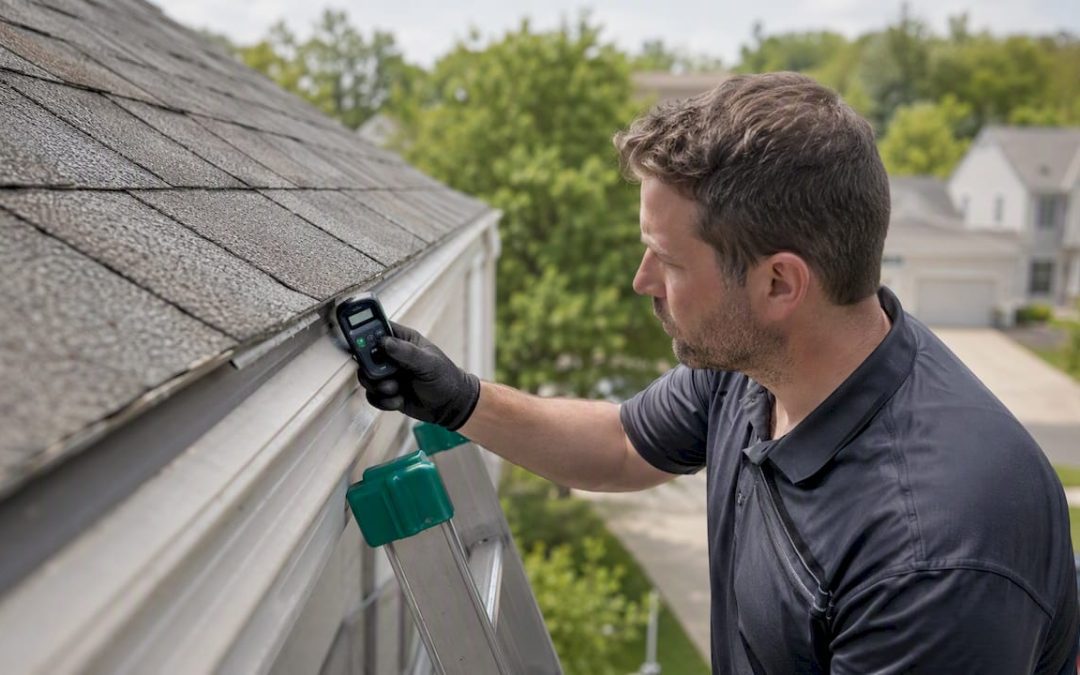
A home inspection typically uncovers issues across six to eight defect categories, and the repair costs inspections uncover add up faster than most buyers expect. An inspection-sample analysis found that 86% of inspections identify at least one repair need, with a national average post-inspection repair bill of roughly $11,247. The most common categories are structural and foundation issues, roofing, HVAC, plumbing, electrical, moisture and mold, and doors and windows.
Here is a quick cost-band summary to anchor your budget before you read further:
- Low (under $500): Caulking, minor door adjustments, GFCI outlet replacements, gutter cleaning
- Moderate ($500–$5,000): Water heater replacement, minor roof repairs, basic plumbing fixes, panel upgrades
- Higher ($5,000–$15,000): Partial roof replacement, HVAC system replacement, crawl space encapsulation, sewer line repair
- Major (over $15,000): Full roof replacement, foundation repair, sewer line replacement, full electrical rewiring
Pro Tip: For any item in the “higher” or “major” band, get two independent contractor quotes before you submit your repair request. Attach those bids to your written ask. A seller who sees real numbers from licensed contractors is far less likely to dismiss the request than one who sees a vague line item from the inspection report.
Key Takeaways
| Point | Details |
|---|---|
| Expect repairs in most transactions | 86% of inspections find at least one repair need; average total runs roughly $11,247. |
| Structural items dominate costs | Structural repairs represent a major portion of national aggregate repair spending; prioritize them in negotiation. |
| Use midpoints for credit requests | Midpoint estimates from contractor bids are defensible and give sellers room to negotiate. |
| Bundle your ask | A single consolidated credit request is more likely to succeed than a multi-page line-item list. |
| Jhunthomeinspections | Delivers 24-hour reports with photo documentation and the Create Request List™ workflow for St. Louis Metro and Southern Illinois buyers. |
Table of Contents
- What repair costs inspections uncover: common findings and U.S. cost ranges
- Inspection red flags that can blow up your budget
- How to get accurate repair cost estimates after your inspection
- Tactics to use inspection findings to negotiate repairs or credits
- A prioritization and budgeting workflow for right after your inspection
- Where the cost ranges and frequency numbers come from
- What buyers typically miss, and what inspectors wish you would ask
- Jhunthomeinspections turns your inspection report into a negotiation file
- Sources
What repair costs inspections uncover: common findings and U.S. cost ranges
Most inspection reports read like a prioritized punch list. Some items are minor; others can reshape your entire offer. The table below maps the most common categories to realistic U.S. cost ranges, how often inspectors flag them, and their urgency level.
| Category | Typical Cost Range | Frequency | Urgency |
|---|---|---|---|
| Roofing (repairs/replacement) | $500–$18,000 | Very common | High |
| HVAC (service to replacement) | $500–$8,000 | Very common | High |
| Plumbing (minor to major) | $200–$10,000 | Common | High |
| Electrical (outlets to rewiring) | $1,500–$36,000 | Common | Safety-critical |
| Foundation/structural | $500–$25,000+ | Moderate | Critical |
| Moisture, mold, water intrusion | $500–$9,000+ | Common | High |
| Doors and windows | $500–$3,000 | Very common | Maintenance |
| Gutters and caulking | $500–$1,500 | Very common | Maintenance |
| Pest/termite damage | $300–$5,000+ | Moderate | High |
| Insulation (attic/crawl space) | $500–$4,000 | Moderate | Maintenance |
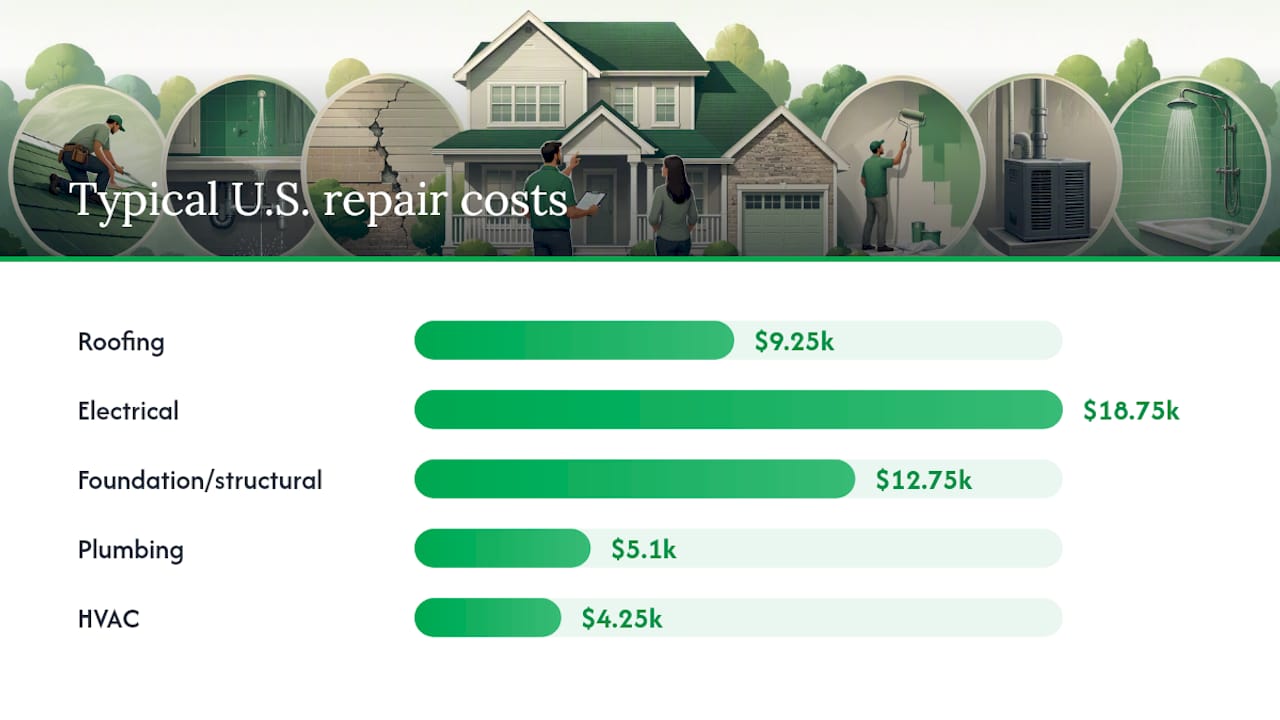
Industry guidance on hidden defects puts foundation repairs between $2,200 and $25,000 or more, water damage and mold between $1,500 and $9,000, and full electrical rewiring as high as $36,000. Roof replacement typically runs $5,800–$13,000 for a standard residential home.
Labor accounts for a majority share of total repair costs in recent inspection-sample data, which means the same scope of work can cost significantly more in a high-labor market like San Francisco than in St. Louis or Memphis.
Pro Tip: *Pull the Bureau of Labor Statistics regional wage data or ask a local contractor for a rough labor multiplier before applying national averages to your specific market.
Inspection red flags that can blow up your budget
Some findings are inconvenient. Others can derail financing, trigger appraisal issues, or turn a $300,000 purchase into a money pit. These are the items that demand immediate attention.
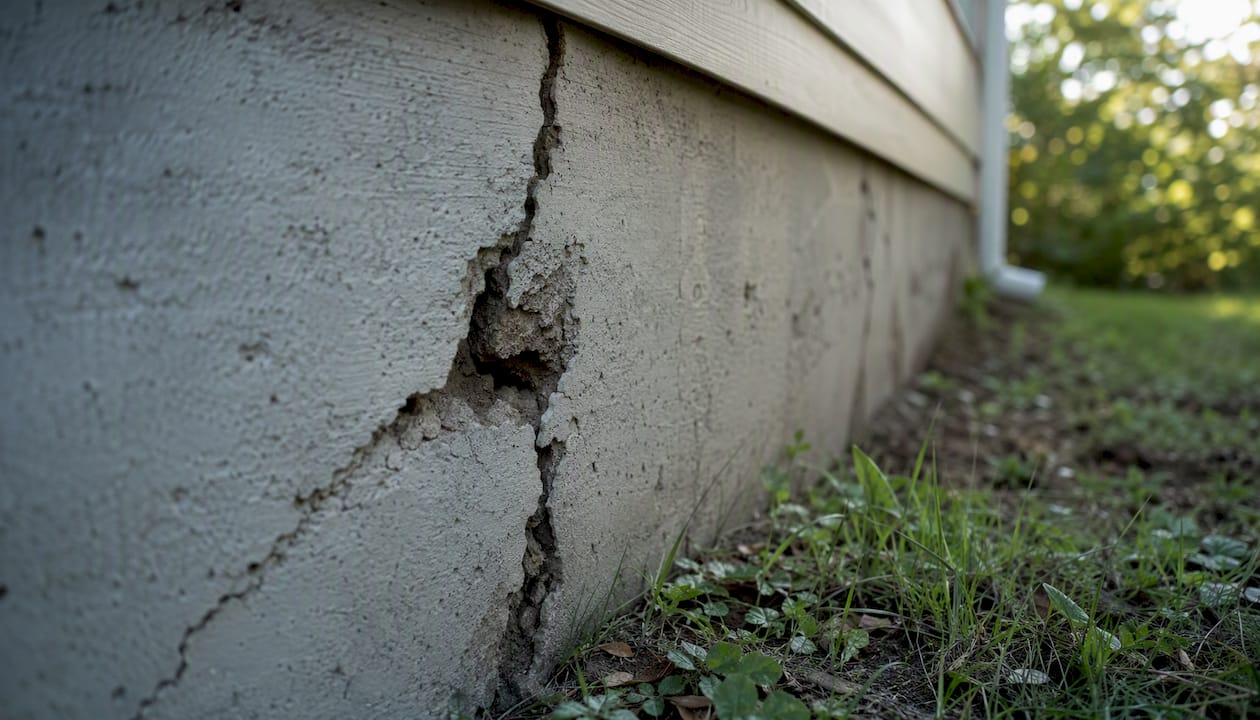
- Major foundation movement: Horizontal cracks in block foundations, stair-step cracks in brick, or floors that slope more than an inch over 20 feet signal active settlement. Repairs can run $10,000–$25,000 or more, and a structural engineer evaluation ($500–$1,000) is required before any contractor quote means anything.
- Active roof leaks with structural damage: A leaking roof that has reached the sheathing or rafters is not a roofing problem anymore. It is a structural and mold problem. Budget for both.
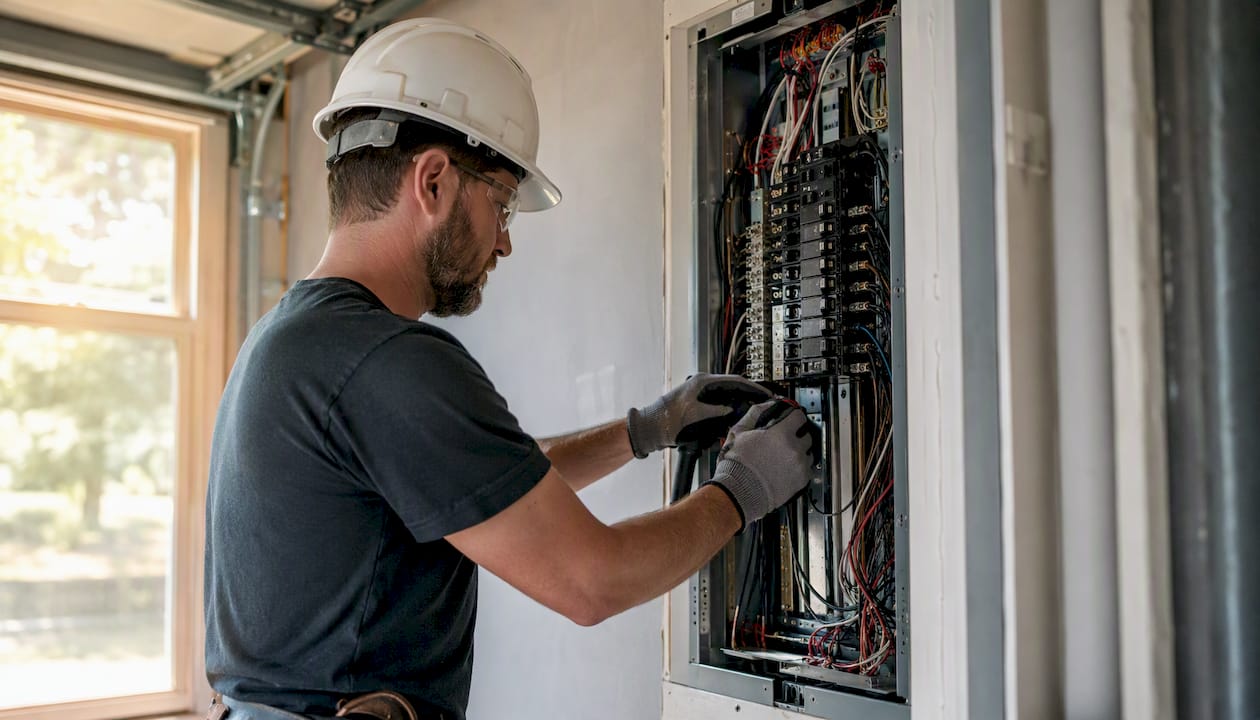
- Outdated or unsafe electrical panels: Federal Pacific Stab-Lok and Zinsco panels are flagged in nearly every inspection where they appear. Full panel replacement runs $1,500–$4,000; full rewiring can reach $36,000 for a larger home.
- Sewer line collapse or root intrusion: A sewer camera inspection (a $200–$400 add-on) can reveal a problem that costs $5,000–$25,000 to fix. Without the camera, you will not know until after closing.
- Major mold or water intrusion: Visible mold in a crawl space or basement often signals a drainage or vapor barrier failure. Remediation alone runs $1,500–$9,000, and the underlying cause adds more.
- Active pest or termite damage: Structural damage from termites is not always visible. A wood-destroying organism (WDO) inspection is a separate add-on worth every dollar.
The Philadelphia Fed’s 2024 national aggregate data estimated the total cost to address U.S. repairs. That proportion tells you exactly where to focus your negotiation energy: structural items carry the most dollar weight nationally, and they should carry the most weight in your repair request.
For a deeper look at which defects most often appear on inspection reports, the home inspection red flags guide from Jhunthomeinspections covers the patterns inspectors see most often in the St. Louis Metro area and Southern Illinois.
How to get accurate repair cost estimates after your inspection
An inspector’s job is to identify and document defects, not to price them. The American Society of Home Inspectors is clear that inspectors typically do not provide guaranteed contractor quotes, and treating a ballpark figure in an inspection report as a negotiation number is a common buyer mistake.
Here is the workflow that actually produces defensible numbers:
- Triage urgent safety items first. Electrical hazards, active gas leaks, and structural failures need a licensed professional on-site before you do anything else. These are not negotiation items; they are go/no-go items.
- Order specialist evaluations for major findings. Foundation concerns need a structural engineer. Sewer concerns need a camera inspection. Roof concerns need a licensed roofer, not just the inspector’s note. See the structural inspection guide for what a structural evaluation covers.
- Get two to three contractor quotes for anything over $500. Written bids from licensed contractors are the only numbers a seller’s agent cannot easily dismiss. One quote looks like cherry-picking; two or three establish a credible range.
- Use midpoints for your negotiation request. A 2026 cost guide recommends using midpoint estimates when building a credit request. A hairline foundation crack epoxy repair runs $500–$1,500 (midpoint: $1,000). A full shingle roof replacement runs $8,000–$18,000 (midpoint: $13,000). AC replacement runs $4,000–$8,000 (midpoint: $6,000).
- Document everything. Photos from the inspection report, specialist letters, and contractor bids form a package. That package is your negotiation file.
A simple bid-request message to send contractors: “I am under contract on a property at [address]. The home inspection identified [specific issue]. I need a written estimate for [scope of work] to use in a repair negotiation before closing. Can you provide a written bid within five business days?”
Pro Tip: Reserve written estimates for items over $500. For minor items under that threshold, a ballpark figure from the inspection report is usually sufficient to include in a bundled credit request without slowing down the transaction.
Tactics to use inspection findings to negotiate repairs or credits
Sellers have four main responses to a repair request: fix it themselves, offer a credit at closing, reduce the sale price, or do nothing. Which response you get depends heavily on how you ask.
Common remedies and when each makes sense:
- Seller repairs: Convenient for buyers but risky. You have no control over the contractor or quality. Require permits and final inspection sign-off for any code-related work.
- Seller credit: The cleanest outcome for most buyers. You control the contractor and the quality. Lenders sometimes limit credits, so confirm the cap with your loan officer first.
- Price reduction: Useful when the credit cap is an issue or when the repairs are cosmetic and you plan to do them over time.
- Scope-limited fix: Sellers sometimes offer to address only the safety items. Acceptable if the remaining items are minor; not acceptable if major structural or system work is left unresolved.
Negotiation checklist:
- Sort findings into safety-critical, structural, major systems, and cosmetic. Only negotiate the first three categories.
- Attach contractor bids or specialist reports for any item over $5,000.
- Use the Create Request List™ workflow to organize findings into a clean, itemized document your agent can submit.
- Lead with a single bundled credit request rather than a line-by-line list. Industry guidance consistently shows that a consolidated ask is more acceptable to sellers than dozens of small items.
- Know your walk-away number before you submit. If the seller’s response leaves more than $X unresolved, you need a plan.
Sample request language: “Based on the attached inspection report and contractor bids, we are requesting a seller credit of $[amount] to address the following items: [list]. We are prepared to proceed with closing on the original timeline if this credit is approved.”
For safety or code-related items, require the work to be completed before closing with permits pulled and final inspections passed. A credit is not an acceptable substitute for a live electrical hazard.
Pro Tip: In a competitive market, a single bundled credit is far less likely to kill a deal than a multi-page repair list. Bundle everything into one number, lead with the two or three biggest items, and let the seller feel like they are solving one problem, not twenty.
A prioritization and budgeting workflow for right after your inspection
The inspection report lands in your inbox. Here is the order to work through it.
Priority order:
- Safety: Active electrical hazards, gas issues, carbon monoxide risks. Non-negotiable before closing.
- Structure: Foundation, load-bearing walls, roof structure. Expensive to fix later; hardest to finance after closing.
- Major systems: HVAC, plumbing, electrical panel. These fail on a timeline; knowing their age and condition sets your post-close budget.
- Water intrusion: Leaks, drainage, mold. Water damage compounds quickly and affects insurability.
- Secondary systems: Insulation, gutters, minor plumbing. Budget for year one.
- Cosmetic: Paint, flooring, fixtures. Plan for year two and beyond.
A sample post-inspection budget for a hypothetical mix of findings:
Repairs almost always reveal secondary issues once work begins, and homeowners insurance typically covers sudden damage but not long-term maintenance failures, so out-of-pocket exposure is real.
Pro Tip: If the seller is resistant to a large bundled credit, try presenting the two or three most expensive items separately with bids attached, then bundle everything else into a single smaller line. It gives the seller a sense of control while keeping your total ask intact.
Where the cost ranges and frequency numbers come from
The figures in this article draw from three main sources, each with a different scope and limitation.
- Philadelphia Fed / American Housing Survey (AHS) brief (2024): National aggregate data covering the full U.S. housing stock. Best for understanding which repair categories dominate spending nationally. Not specific to transaction-driven inspections.
- Inspection-sample analysis (ibuyhaus, 2025): Draws from actual post-inspection repair data. Produces the $11,247 average and the 86% finding rate. Sample composition matters; results skew toward buyers who proceeded with repairs, not those who walked away.
- Industry cost guides (Repair Pricer, OfferWise, iPropertyManagement): Aggregate contractor pricing data and inspection-triggered repair ranges. Useful for item-level midpoints; ranges are wide because labor and material costs vary significantly by region.
Why ranges are wide: A roof replacement in rural Missouri costs less than the same job in suburban Chicago. Labor rates, permit costs, material availability, and contractor density all shift the number. National averages are a starting point, not a final answer.
When to prefer contractor quotes over national averages: Any item over $2,000, any structural item regardless of cost, and any item where the inspection report notes uncertainty about scope. A $500 national average for a plumbing repair means nothing if the inspector flagged “possible pipe failure behind wall.”
| Source | What it covers | Best used for |
|---|---|---|
| Philadelphia Fed / AHS | National aggregate repair spending | Category prioritization |
| ibuyhaus inspection-sample | Post-inspection repair averages | Total budget benchmarking |
| OfferWise / iPropertyManagement | Item-level cost ranges | Midpoint negotiation requests |
Use midpoints when building a credit request. They are defensible, they split the difference between low and high estimates, and they give the seller room to negotiate without you giving up the full ask.
What buyers typically miss, and what inspectors wish you would ask
Most buyers read the inspection report looking for the big number. That is the wrong frame. The report is a prioritized list of conditions, not a repair invoice, and the gap between those two things is where buyers lose money.
The most common mistake: treating every finding as equally urgent. A cracked outlet cover and a failing sewer line appear on the same report. Buyers who negotiate every line item lose credibility and often lose the deal. Focus on the items that affect safety, structure, and financing.
The second most common mistake: skipping add-on inspections to save $200–$400. A sewer camera inspection or radon test costs a fraction of what the problem costs to fix after closing. The role of the inspector is to document conditions, not to guarantee outcomes. Add-ons extend that documentation into areas a standard visual inspection cannot reach.
Ask your inspector these two questions before you leave the walkthrough: “Which item on this report would you fix first if it were your house?” and “Is there anything here that needs a specialist before I can get an accurate repair cost?” Those two answers will tell you more than re-reading the full report twice.
Pro Tip: Document conditions with your own photos during the walkthrough. Inspector photos are in the report, but your own timestamped images give you an independent record if a seller disputes a finding during negotiation.
Jhunthomeinspections turns your inspection report into a negotiation file
When the inspection report arrives, the clock starts. Sellers expect a response within days, and buyers who show up with vague requests get vague answers. Jhunthomeinspections delivers comprehensive inspection reports within 24 hours, with photo documentation and itemized findings organized so your agent can act immediately.
The Create Request List™ workflow converts those findings into a clean, itemized document your agent submits directly to the seller, cutting the back-and-forth that typically slows repair negotiations. Add-on services including sewer camera inspections, radon testing, mold inspections, and WDO reports give you specialist-level evidence for the items that matter most. Jhunthomeinspections serves the St. Louis Metro area and Southern Illinois, with in-person and video inspection options and pay-at-close availability so the cost never holds up your transaction. Schedule your inspection before your contingency window closes.
Sources
- Home repair costs (Philadelphia Fed brief)
- Average Repair Cost After Home Inspection: 2025 Report – ibuyhaus
- Top Hidden Problems Found During Home Inspections (2026 Guide)
- Home Inspection Repair Costs in 2026: Foundation, Roof, HVAC
Recent Comments