
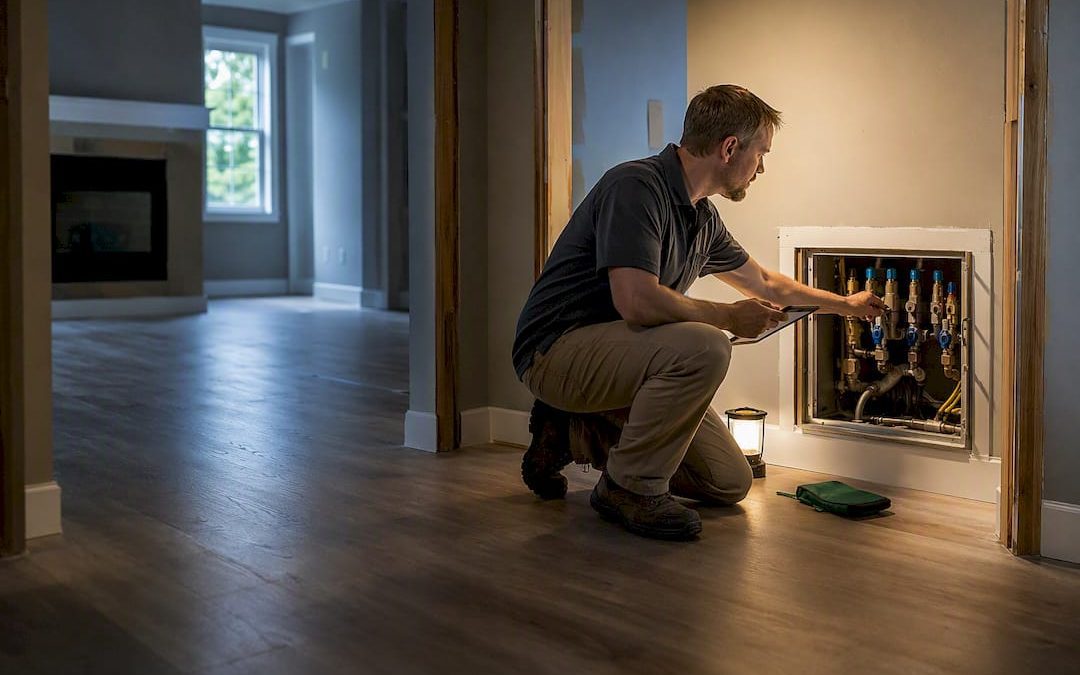
Yes, get a professional inspection before buying a foreclosed home whenever you can. An inspection reveals deferred maintenance, vandalism, and stripped systems banks won’t disclose or repair, giving you leverage to renegotiate or walk away. If interior access is blocked, as often happens at auction, treat the purchase as sight-unseen and budget for the worst case up front.
TL;DR:
- Interior access is generally unavailable at auction properties, so buyers should reserve 10 to 20 percent of their bid for uncovered repairs.
- REO listings typically allow inspections, but buyers need to negotiate contingencies and plan for potential delays in dewinterization and utility reinstatement.
- Common red flags include structural cracks, roof neglect, vandalism, and missing fixtures, which suggest extensive hidden damage in foreclosed homes.
- Specialty tests like sewer scopes and mold inspections are recommended based on property age and visible issues, often saving thousands in future repair costs.
- Getting a title and lien search along with the inspection report within a short window helps prevent post-sale surprises from unpaid liens or legal issues.
Table of Contents
- Why a Foreclosure Home Inspection Matters More Than a Standard One
- Auction, REO, or Short Sale: How the Purchase Type Changes Your Access
- Red Flags Inspectors Watch for in a Foreclosed Property
- Specialized Tests Worth Adding, and What They Cost Versus What They Save
- Getting Inside: Utilities, Timing, and Contingency Windows
- Turning the Report Into a Decision: Negotiate, Walk, or Budget
- What a Professional Foreclosure Inspection Actually Looks Like
- Your 72-Hour Move If You’re Buying a Foreclosure
- Book a Foreclosure Inspection With Local Expertise Behind It
- Sources
Why a Foreclosure Home Inspection Matters More Than a Standard One
Banks selling REO (real estate owned) properties don’t fix anything, and they don’t warranty the condition either. You’re buying whatever is behind the walls, and disclosure paperwork on a foreclosure is often thin or missing entirely because no one living in the house can tell an inspector what’s wrong with it. That gap is exactly why a thorough inspection matters before you buy, foreclosure or not, but the stakes climb sharply here.
Vacant properties develop problems occupied homes rarely do:
- Months of deferred maintenance the previous owner couldn’t afford to address
- Vandalism or theft, including copper pipe and wiring stripped for scrap value
- Mold growth from shut-off HVAC systems and trapped humidity
- Pest infestations that go unchecked for a year or more
An inspection report turns these unknowns into evidence. You can use it to walk away, renegotiate price, or set a realistic repair budget, according to Freddie Mac’s guidance on the home inspection process. Skip it, and you’re guessing.
Auction, REO, or Short Sale: How the Purchase Type Changes Your Access
Your inspection options depend entirely on how the property is being sold, and this catches first-time foreclosure buyers off guard more than anything else.
- Auction purchases. Interior access is usually off the table entirely. You’re bidding on what you can see from the curb, permit records, and public tax data. Experienced investors build a repair reserve of 10 to 20% or more of the purchase price into their bid to cover whatever the inside reveals after closing, as explained in the guide on how much are you spending on home improvements.
- REO (bank-owned) listings. Banks selling through a real estate agent typically allow standard inspections, and you can negotiate an inspection contingency into the contract just as you would with any resale. If the water and gas are off, you’ll need to negotiate time for dewinterization.
- Short sales. Inspections are usually permitted, but the seller’s lender has to approve the sale, and that process drags. Plan for a longer timeline than a typical purchase, and don’t assume the seller’s urgency translates to the bank’s.
Whether you can even get inside a foreclosed property before you own it depends almost entirely on which of these three paths you’re on, according to LegalClarity’s breakdown of foreclosure inspection access.
Red Flags Inspectors Watch for in a Foreclosed Property
A foreclosure home repair inspection needs to move faster in some areas and slower in others than a standard buyer’s inspection. Here’s where to focus attention system by system.
- Structure and foundation: Look for visible cracking in the slab or block, sagging floor lines, and doors that no longer close square. These often signal settlement that’s been ignored for years, not months.
- Roof and exterior: Missing or patched shingles, exposed decking, and gutters pulled loose from long-term neglect show up constantly on vacant properties that nobody’s been maintaining.
- Plumbing and sewer lines: Check for removed copper piping, winterized lines that haven’t been reactivated, and sewer lateral issues that only a scope can catch.
- Electrical systems: Watch for outdated or unsafe panels, double-tapped breakers, and amateur wiring fixes, all common in homes where a struggling owner did their own repairs.
- HVAC and mechanicals: Confirm the furnace, water heater, and AC unit are actually present. Stripped copper coils and missing components are a common foreclosure surprise.
- Mold, pests, and hoarding damage: Musty odors, visible growth on drywall, and rodent trails point to problems that go well beyond a cleaning job.
- Stripping and vandalism: Missing fixtures, cut wiring, and ripped-out appliances are the calling card of a property that sat empty and unsecured for too long.
- Title and lien clues: Overgrown yards next to unpaid tax notices or HOA violation stickers on the door often hint at liens that will need separate research.
Flipped foreclosures deserve their own layer of suspicion. A property with fresh paint and new countertops can still be hiding a rehab job with unculled permits, and inspectors who work these deals regularly recommend checking permit records against the visible renovation before you assume anything is up to code, per ASHI’s guide to inspecting rehabbed homes.
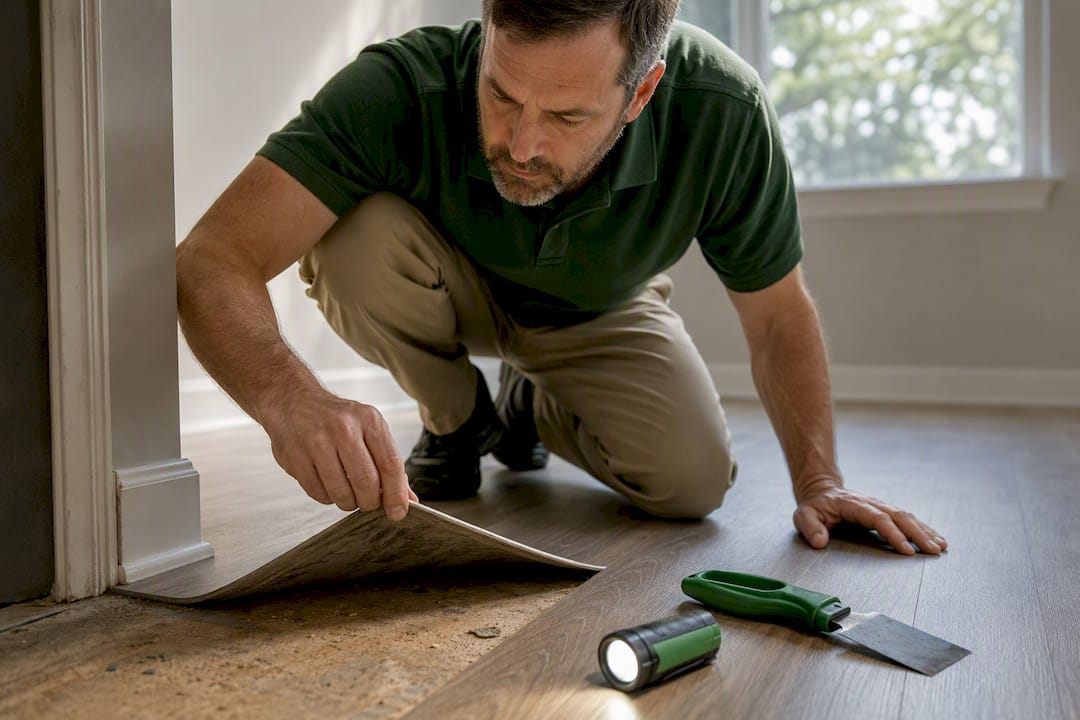
Pro Tip: Cosmetic upgrades on a foreclosure flip are the easiest thing to fake and the first thing to distrust. If a seller replaced the flooring, ask what’s underneath it before you ask what color it is.
Specialized Tests Worth Adding, and What They Cost Versus What They Save
Foreclosure home assessment doesn’t stop at the general inspection. Vacancy creates specific risks that justify a few targeted add-ons, and skipping them to save a few hundred dollars is how buyers end up with five-figure surprises.
| Test | When to order it | Typical cost |
|---|---|---|
| Sewer scope | Older homes, vacant properties, or any visible drainage issue | $125 to $500 |
| Mold testing | Musty smell, visible growth, or long-term vacancy | Varies by scope; remediation often runs far higher |
| Radon testing | Homes in higher-radon regions, especially with basements | Low relative to potential health cost |
| Lead paint testing | Homes built before 1978 | Justified by age alone |
| Well and septic inspection | Any property not on municipal water or sewer | Separate from the general inspection |
The sewer scope is the clearest example of cost math working in your favor. A scope runs $125 to $500, while replacing a failed sewer lateral can run $5,000 to $10,000 or more. On a vacant property where nobody’s flushed a toilet in a year, that’s not an optional add-on.
- Order specialty tests based on visible cues and property age, not habit
- Treat well and septic systems as their own inspection line item, since general inspectors typically don’t cover them
Getting Inside: Utilities, Timing, and Contingency Windows
Vacant foreclosures often have the water and gas shut off, which means the inspector can’t run a real plumbing or HVAC test until someone turns them back on.
- Dewinterizing a property to restore water service typically costs $100 to $200, and some banks insist their own property manager handle it rather than letting you arrange it.
- Get any extension for dewinterization or scheduling delays in writing, since verbal promises from a bank’s asset manager tend to evaporate.
- REO inspection contingency windows commonly run 7 to 10 days; short sales can stretch well beyond that as lender approval drags.
- Run a title and lien search in parallel with your inspection. It typically costs $75 to $200 and takes one to two weeks, and it catches problems no inspector will ever see.
A title search costing under $200 can uncover liens that would otherwise survive the sale and land on you after closing.
Turning the Report Into a Decision: Negotiate, Walk, or Budget
An inspection report is a decision tool, not a hammer to force a reluctant bank into repairs, according to Freddie Mac’s own framing of the inspection process. Most REO sellers won’t negotiate repairs the way a traditional seller might.
- Separate life-safety and major structural findings from cosmetic ones, and prioritize your attention accordingly
- Get contractor bids on anything major before you finalize your offer or walk away
- Use specialized reports, like a sewer scope, as documented leverage if the contingency allows renegotiation
- Weigh escrow holdbacks or repair credits against simply walking away when the numbers stop making sense
Pro Tip: If your repair estimates start approaching what you’d spend on comparable renovated homes nearby, that’s your signal to walk, not to keep negotiating.
What a Professional Foreclosure Inspection Actually Looks Like
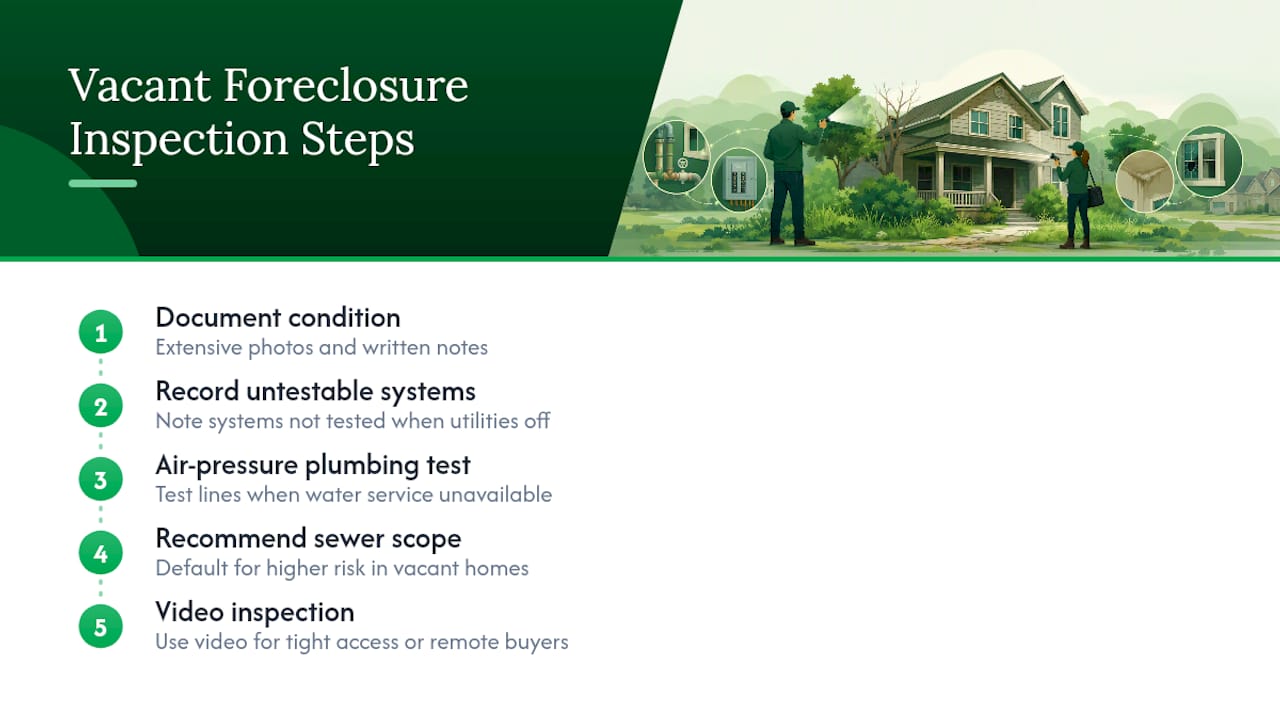
Inspectors working a vacant foreclosure document conditions differently than they would an occupied home. Expect extensive photos, written notes on what couldn’t be tested because utilities were off, and workarounds like air-pressure testing plumbing lines when water service isn’t available yet. A sewer scope often gets recommended by default rather than left as an afterthought, simply because the risk profile on an empty house is higher. A video home inspection can also fill gaps when access windows are tight or out-of-town buyers can’t attend in person.
Your 72-Hour Move If You’re Buying a Foreclosure
Confirm the sale type first. That single fact decides whether an inspection is even possible. If it is, book a licensed inspector immediately and request utility activation in writing. Run a title and lien search in parallel rather than after. If you’re bidding at auction, set a conservative repair reserve before you bid, never after.
— JOHN
Book a Foreclosure Inspection With Local Expertise Behind It
Foreclosure buyers in the St. Louis Metro area and Southern Illinois need an inspector who already knows what vacant properties tend to hide, and who can move fast when a contingency window is short. Professional home inspection services handle both in-person and video walkthroughs, with reports typically returned within 24 hours to accommodate tight contingency windows.
Add-ons like sewer scope and mold testing are built into scheduling rather than bolted on as an afterthought, and the Create Request List™ tool keeps your agent and the seller’s side coordinated on repair asks without a dozen scattered emails. Buyers can inquire about payment options designed to help manage upfront costs during the home buying process. Visit the inspection services page to check availability and schedule your foreclosure inspection before your contingency clock runs out.
Sources
- My Home by Freddie Mac — What to expect: home inspection
- Can You Inspect a Foreclosed Home in Advance? – LegalClarity
- Ibuyer
This article is general information, not a substitute for advice from a qualified financial advisor. Consult a qualified financial professional about your own circumstances before acting on anything here.
Recent Comments