
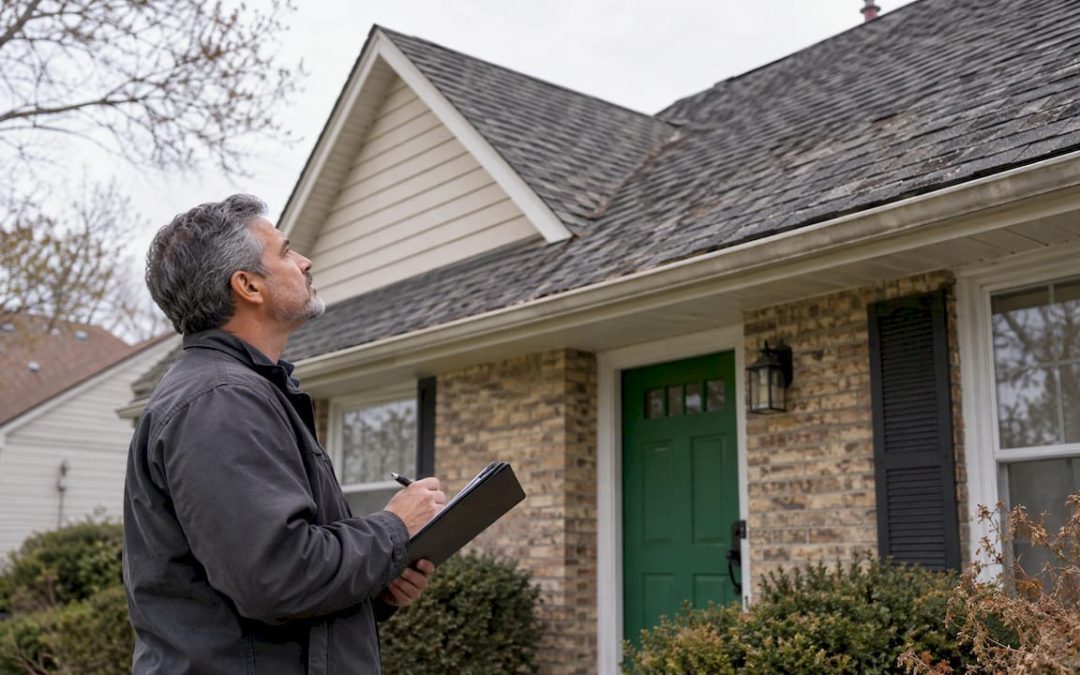
A roof inspection before you buy tells you what shape the roof is in, how much life it likely has left, and whether it should change your offer. For most buyers, the roof check is part of the buyer’s home inspection, done during your inspection window and delivered as a written report. Hunt Home Inspection serves the St. Louis Metro area and Southern Illinois, and our reports come back within 24 hours, so you have time to act on what the roof section says before your deadlines run out.
This guide explains what a roof inspection covers, where it stops, how to read the findings, and what to do when the roof turns out to be a problem.
TL;DR
- A standard home inspection includes the roof: coverings, flashing, vents, gutters, chimney, skylights and signs of active leaks. It is usually done from the ground, the eaves or a ladder, not by walking the roof.
- The roof’s age matters as much as its condition. Asphalt shingles are commonly said to last 15 to 30 years, so a 20-year-old roof may be near the end.
- The report is a snapshot, not a warranty. Inspectors are not required to predict service life, run a water test or certify the roof.
- If the report flags the roof, you can ask for repairs, a lower price or a closing credit, and contractor quotes make that request stronger.
- Book early. Your inspection window is short, and a lender can require roof repairs before closing.
Table of Contents
- What a roof inspection for buyers covers
- What the report can and cannot tell you
- Roof age and lifespan: the number that drives your decision
- Do you need a separate roof inspection?
- When the roof is a problem: your options
- How to choose an inspector for the roof check
- Questions to ask about the roof before you close
- Inspection Hunt: what we do for buyers
- Our view on roofs and buyers
- FAQ
- Sources
What a roof inspection for buyers covers
The roof is one of the most expensive parts of a house to replace, which is why buyers ask about it first. The good news is that you don’t need a separate appointment to get a first answer. The roof is a standard part of a home inspection.
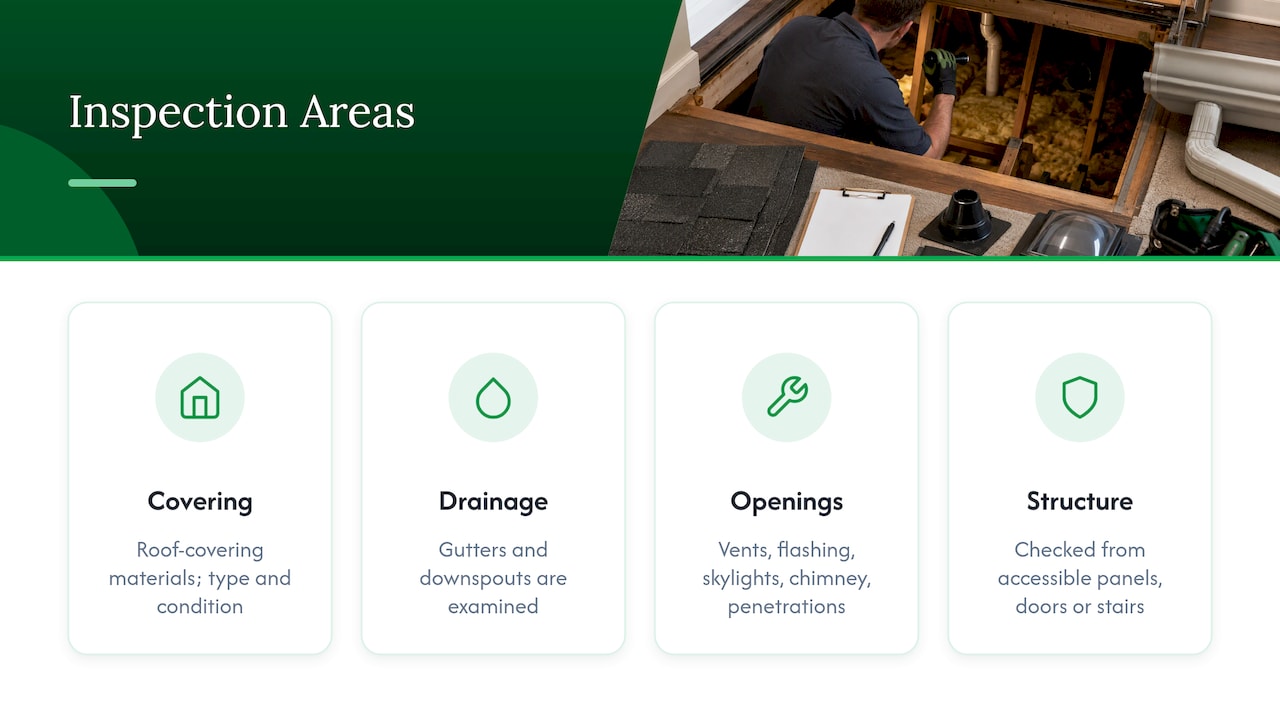
Under the InterNACHI Standards of Practice (revised October 2022), the inspector examines the roof-covering materials, gutters, downspouts, vents, flashing, skylights, chimney and other penetrations. The roof structure is checked from readily accessible panels, doors or stairs. The inspector describes the type of covering and reports observed signs of active leaks. A Florida consumer guide on home inspections describes the same scope: the condition of shingles, tiles or other roofing materials, flashing, ventilation and drainage, plus chimneys, skylights and penetrations, all in a written report that may include photos and recommendations.
What the inspector looks at
This Old House breaks a thorough roof inspection into three layers, and it is a useful way to picture what is being checked:
- Interior: ceilings, attic and walls, looking for water staining, mold, rot and pests.
- Materials: shingles, metal panels or tiles for damage, staining, moss and missing pieces, including flashing details. Flashing is the metal strip sealing the joints where the roof meets a chimney, wall or vent.
- Structure: sagging or uneven planes, soffit and fascia (the underside and edge trim of the roof overhang), attic ventilation, gutters, and damage around chimneys and skylights.
The interior part matters more than buyers expect. A roof can look fine from the street while the attic shows stains from a slow leak. If you want to understand that part, our guide to attic insulation checks for buyers explains what is visible up there and what it means.
What the report can and cannot tell you
A roof section in an inspection report is an informed visual opinion on a given day. Know its boundaries so you read it correctly.
The InterNACHI standards say the inspector is not required to walk the roof, predict how long it will last, perform a water test or certify it. In practice, that means you should read phrases like “appears serviceable” as a statement about what was visible, not a promise about next winter’s storms.
What the report does give you:
- The covering type and visible condition. Curling, cracked or missing shingles, exposed nails, worn flashing.
- Signs of water. Stains on ceilings or in the attic, soft spots, rot at the fascia.
- Drainage problems. Clogged or detached gutters and downspouts that push water against the house.
- Photos and recommendations. Photos let you and your agent see exactly what the inspector saw.
What it does not give you is a repair price. That comes from a contractor quote, covered below.
Roof age and lifespan: the number that drives your decision
Condition tells you about today. Age tells you about the next few years. EffectiveAgents’ buyer guide notes that a typical asphalt shingle roof lasts 15 to 30 years, so the roof’s age relative to its expected lifespan is a key data point. It also points out that structural sagging can mean the framing has been weakened by long-term moisture.
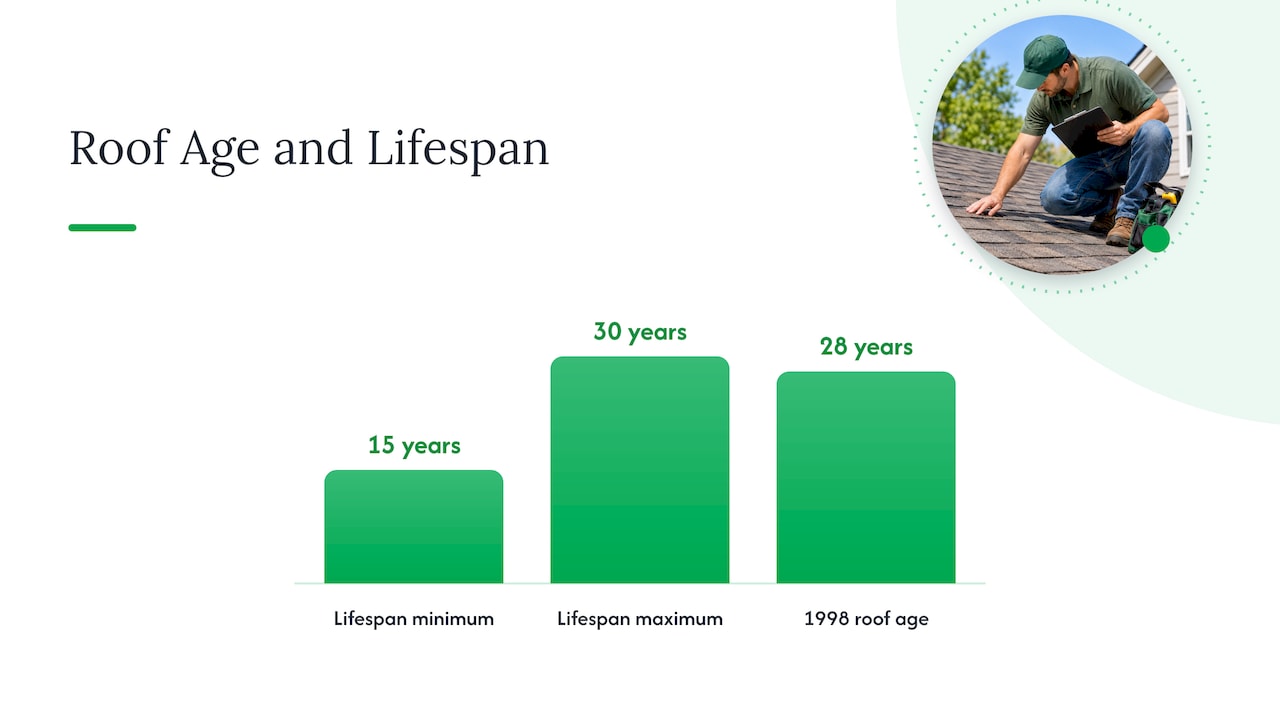
A worked example: you are looking at a 1998 ranch with an asphalt shingle roof, and you are buying in 2026. If the roof is original, it is 28 years old, at the far end of that range. The inspector may find no active leaks, and the report can still be clean. For your budget, though, you should treat a roof replacement as something that could land in your first few years of ownership. A 2019 roof on a similar house is a different purchase, even if the report wording is identical.
Two things help you pin this down:
- Ask the seller for proof of installation. Permits, invoices and warranty paperwork are the best evidence. Our guide to verifying roof age shows where to look when the seller doesn’t remember.
- Understand real-world lifespans. Ventilation, climate and installation quality change how long a roof lasts. We cover that in roof life expectancy.
If you are buying with an FHA 203(k) renovation loan or you are a first-time buyer working with a tight budget, roof age is also the number to raise with your lender and your insurance agent early, before you are committed.
Do you need a separate roof inspection?
For many houses, the roof section of the buyer’s inspection is enough to move forward. The roof is inspected, the age is documented, and nothing is flagged. You have what you need.
A separate look from a roofing contractor makes sense when the report points to a real concern: widespread worn shingles, an old roof near the end of its range, stains in the attic, sagging, or damaged flashing. At that point you are no longer asking “what shape is it in?” but “what will it cost to fix or replace?” A roofing contractor is the person who can write that estimate, and you need those figures during your inspection period.
The cost of any roof evaluation depends on several things. Owens Corning’s inspection guide lists why you are getting one (replacement versus buying a home), who you hire, roof size and pitch, access to the roof and attic, and your region. Because of that spread, take any national average you see online as a rough guide only. Ask for the fee and what it includes before you book anyone.
Timing matters more than anything
Your contract gives you a limited number of days to inspect and negotiate. The CFPB advises buyers to schedule an independent inspection as soon as possible so there is time for additional inspections if something turns up. That is the practical rule for roofs: get the main inspection done early, so that if the roof is flagged you still have days left to collect contractor bids.
When the roof is a problem: your options
Say the report flags a roof that is near the end of its life or leaking. You have more choices than “buy it as is” or “walk away.”
Zillow’s negotiation guide lists three main routes after an inspection:
| Option | What it means | Best when |
|---|---|---|
| Seller repairs | The seller fixes the roof before closing | The problem is specific and fixable, such as damaged flashing |
| Price reduction | You buy at a lower price and handle the work yourself | The roof needs replacing and you want control over the contractor |
| Closing credit | The seller credits you money at closing | You want cash toward the work without lowering the sale price |
Zillow also recommends backing a request with contractor quotes. Its example is a roof leak estimated at $8,000. A quote turns “the roof looks old” into a number the seller can respond to.
Realtor.com’s advice adds two practical steps: have your agent review local comparable sales and research local roofing costs, and collect at least two local contractor bids during the inspection period. If the seller won’t move, the buyer can terminate the contract, depending on the contract’s terms.
Financing can change the picture too. The CFPB notes that when major repairs such as a new roof are needed, a lender can require that they be made before closing, or that funds be placed in a special account to pay for them right after closing. Talk to your loan officer as soon as the report arrives.
If the seller says no to everything, see what to do when a seller refuses repairs.
Using your report in a negotiation
A clear, organized report makes the conversation with the seller’s side easier. Put the roof findings first, attach the photos, and attach the quotes. Keep the request short: what the problem is, what it costs, and which of the three options you want. Our Create Request List™ tool is built for this step. It streamlines communication between you and your agent so the repair request goes out accurately and quickly.
How to choose an inspector for the roof check
Because the roof is part of the home inspection, the inspector you choose decides how good your roof assessment is. Licensing varies widely by state. Realtor.com reported in August 2026 that, per ASHI, 12 states don’t regulate home inspectors at all and only 35 clearly require a state license or registration. In a state with no rules, anyone can call themselves an inspector, so credentials are the thing to check.
Zillow suggests checking credentials in the InterNACHI database, confirming errors-and-omissions and general liability insurance, asking for a sample report, getting quotes from two or three inspectors, and clarifying what the fee includes.
Our questions to ask a home inspector guide gives you the list, and the selection criteria for homebuyers page explains how to weigh the answers. For a price picture, see home inspection costs explained.
Questions to ask about the roof before you close
You don’t need a technical vocabulary. Bring these to the seller, your agent and your inspector:
- How old is the roof, and is there paperwork showing when it was installed?
- Was the old roof torn off, or was a new layer put over it?
- Have there been leaks, even ones that were repaired?
- Has there been an insurance claim for hail or wind damage?
- Is there a warranty that transfers to a new owner?
- Does the attic show stains, damp insulation or poor ventilation?
Write the answers down. Anything the seller says verbally should also be in the disclosure or the contract.
Inspection Hunt: what we do for buyers
Hunt Home Inspection, LLC does buyer’s home inspections across the St. Louis Metro area and Southern Illinois. Our reports are delivered within 24 hours, which is the difference between having a few days to negotiate and scrambling. You can choose in-person or video walkthroughs, and we offer evening and weekend scheduling for buyers who work during the day. We offer discounts for veterans and first-time buyers, and for some services, payment at closing. Our team holds NACA, ASHI and HUD 203k certifications, which matters if you are financing a fixer-upper.
If you are ready to book, see our inspection services. For the full picture of why the inspection itself pays off, read why a home inspection matters before you buy.
Our view on roofs and buyers
Most of the roof stress we see in a deal comes from timing, not from the roof. A buyer gets a report late, the roof is flagged, and there is no room left to get quotes. So we built our process around speed and clarity: a report within 24 hours, evening and weekend appointments, and video walkthroughs for buyers who can’t be on site.
We also think first-time buyers, low-income families and veterans deserve the same thorough inspection as anyone else, which is why we offer discounts and why the Create Request List™ exists. It turns a long report into a clear request your agent can send to the seller.
Our advice is simple. Book the inspection as soon as you are under contract, read the roof section next to the roof’s age, and use quotes to ask for what you need. A roof isn’t a reason to panic. It is a number to negotiate.
JOHN
FAQ
Is the roof included in a standard home inspection?
Yes. Under the InterNACHI standards, the inspector examines the roof coverings, flashing, vents, gutters, chimney, skylights and other penetrations, and reports signs of active leaks. The inspector isn’t required to walk the roof or certify it, so the report is a visual assessment of its condition.
How long does a roof last?
A typical asphalt shingle roof lasts 15 to 30 years, according to EffectiveAgents’ buyer guide. Climate, ventilation and installation quality all affect that range, so ask for the installation date and read it alongside the inspector’s findings.
Can I ask the seller to replace the roof?
You can ask for repairs, a price reduction or a closing credit, and whether the seller agrees is up to them. Contractor quotes make the request stronger. If you are financing, the lender can also require major roof repairs before closing.
When should I schedule the inspection?
As soon as you are under contract. The CFPB advises scheduling an independent inspection promptly so there is time for any additional inspections. A short window leaves little room to collect roof quotes after a flagged report.
Sources
- InterNACHI Home Inspection Standards of Practice
- Home Inspections 101, Florida Office of the Insurance Consumer Advocate
- Guide to Roof Inspections, This Old House
- Home Inspection Red Flags: A Buyer’s Guide, EffectiveAgents
- Roofing Inspection Guide, Owens Corning
- Schedule a home inspection, Consumer Financial Protection Bureau
- How to Negotiate After an Inspection, Zillow
- Should You Buy a House That Needs a New Roof?, Realtor.com
- In 12 States, Anyone Can Call Themselves a Home Inspector, Realtor.com
- How to Pick a Home Inspector, Zillow
Recent Comments